
Apple Inc, which had planned to shift only 10 per cent of its global production base from China to India with respect to iPhones at the end of FY26, is currently churning out one out of every four iPhones in the world from India.

The US House of Representatives has passed the Lindsey O Graham Sanctioning Russia and Iran Act of 2026, authorising President Trump to impose sanctions on Russia's energy sector and tariffs on countries like India and China that purchase Russian oil and gas. The legislation aims to curb Russia's ability to evade existing sanctions and reduce global dependence on its energy exports, despite some Democratic opposition to increased tariff authority for the President.

Olympic gold medalist Abhinav Bindra congratulated Indian athletes for their Asian Games performance but stressed the critical need to enhance the country's high-performance sports ecosystem. He highlighted the urgency required for preparations, with the Los Angeles Olympics less than two years away, advocating for robust systems that support athletes from early stages to build resilience and ensure timely expert intervention.

India achieved a respectable fourth-place finish in the Asian Games medals tally, securing 85 medals including 21 gold, driven by a significant late surge in boxing, archery, wrestling, and hockey, despite initial setbacks in shooting and athletics.

India and Japan have signed a Memorandum of Arrangement on maritime security cooperation, committing to deepen defence ties and oppose unilateral actions that impede freedom of navigation in the Indo-Pacific, a move seen as directed at China's increasing military presence.

Gujarat CID has arrested Rafiqul Alam, the alleged 'mastermind' behind 1,090 cybercrimes totalling Rs 1,071.5 crore, who was found to have links with China-based criminals and converted illicit funds into cryptocurrencies.

External Affairs Minister S Jaishankar has publicly acknowledged India's intensified diplomatic efforts to resolve the Ukraine conflict, engaging directly with both Kyiv and Moscow. India is focusing on critical issues like Black Sea shipping safety, grain exports, and energy supplies, moving beyond its previous advocacy role. Jaishankar also highlighted India's historical ties with Russia and discussed the evolving global geopolitical landscape, including the repositioning of the US and the rise of China.

Prime Minister Narendra Modi cautioned against the 'weaponisation' of technology and critical minerals at the BRICS summit, advocating for cooperation to foster shared prosperity. Concurrently, Chinese President Xi Jinping announced plans for an open-source AI ecosystem for BRICS nations, positioning Beijing as a key technology partner amid global AI competition.

'India should hold several high-level chess tournaments that would attract the world's top players so that the country will have a say in the game.'

The challenge for India lies in navigating complex landscape to its best advantage. The BRICS Summit will test its navigation skills, asserts former foreign secretary Shyam Saran.

The Sports Ministry conducted a review of India's Asian Games performance, scrutinising the lower-than-expected medal haul in athletics and badminton. Chaired by Sports Minister Mansukh Mandaviya, the meeting addressed issues like injured athletes and future planning for the 2028 Los Angeles Olympics, with a strong emphasis on federations delivering results and nurturing young talent.

Chinese President Xi Jinping addressed the BRICS summit, urging the bloc to play a significant role in achieving peace and tranquillity in West Asia and the Gulf region. He highlighted BRICS' growth over two decades, its efforts in tackling global challenges, and its steadfastness in safeguarding the interests of the Global South. Xi called for opposing the Cold War mentality, strengthening multilateralism, and promoting cooperation in emerging domains like AI, as China prepares to chair the next summit.
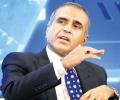
'The Rs 35,000 crore of capex every year, I don't get to sign 35 paise out of this.'

Chinese President Xi Jinping's upcoming visit to India for the BRICS summit is a pivotal diplomatic event poised to significantly impact bilateral ties and global cooperation amidst ongoing international instability.

China emphasises proper handling of differences and a long-term perspective for bilateral ties ahead of President Xi Jinping's visit to India for the BRICS summit and talks with Prime Minister Narendra Modi. The visit aims to stabilise relations following the 2020 Ladakh standoff and strengthen BRICS cooperation.

'Indian IT firms must hire and train more Americans while reducing dependence on sending employees from India to the US.'

'If you listen to a rowdy in a class, he will keep on bullying you.' 'India can say do whatever you want. We will not compromise on anything.'

India's Asian Games campaign looked bleak in Nagoya. A slow medal start saw the country slip to around 12th, before a late surge took India back to fourth with 85 medals.

Electric commercial vehicle manufacturers in India are struggling to meet localisation requirements under the PM eDRIVE scheme, set to begin on Tuesday. The Society of Indian Automobile Manufacturers (Siam) has requested a seven-month extension until April 1, 2027, citing disruptions in the supply of rare earth magnets due to China's export restrictions and geopolitical tensions. The government is yet to decide on the request, which aims to prevent production disruptions and allow time for local supply chain development.

Indian archers returned from the Asian Games with a historic haul of 5 gold medals, 2 Olympic quotas, and other medals, celebrating their success and triumphs over global powerhouse South Korea. Coaches and athletes expressed elation, crediting rigorous training, teamwork, and a supportive ecosystem for their unprecedented performance.

Industry experts advocate for India to develop its own artificial intelligence (AI) safety framework, distinct from US or EU models, to address unique challenges like deepfakes and cyberattacks. They call for a comprehensive commitment involving all stakeholders and a hybrid regulatory approach combining voluntary and binding measures, as the Indian government also considers new AI regulations.

In recent years, China and Russia have pushed for de-dollarisation within BRICS, which India has resisted. One reason is that India does not want to hurt its relationship with the United States, and another is the fear of China controlling trade because the renminbi is considered the strongest currency in the bloc today.

India continued its strong performance at the Asian Games, securing more medals across various disciplines. Shooter Esha Singh won a hard-fought silver in the women's 25m pistol, while Gulveer Singh added another silver in the men's 1500m. Other notable achievements include Kurash player Picky Balhara's bronze, Vithya Ramraj breaking a national record for bronze in hurdles, and several boxers, the men's cricket team, and squash teams advancing. However, some defending champions faced early exits.

The highlight of the successful BRICS Summit was its ability to deliver a joint statement that all members, including Iran and the United Arab Emirates, embroiled in the war in West Asia, signed.

India won six athletics medals at the Asian Games on Monday, including a javelin silver-bronze double, as Esha Singh and Murali Sreeshankar added more silver.

Digital services major Jio Platforms is anticipated to list on the stock exchange by the end of October, with an estimated enterprise valuation of USD 143-146 billion, making it India's largest public offer at around USD 3.8 billion.

Zoho cofounder Sridhar Vembu dismisses exaggerated fears about AI's catastrophic potential and global development pauses. He advocates for India to adopt an independent AI strategy, fostering partnerships while avoiding entanglement in US-China tech rivalry. Vembu stresses extensive investment in foundational R&D across sectors, distinguishing it from costly frontier AI model development. He also highlights concerns about AI's impact on human judgment, skill erosion, and job disruption, particularly in software engineering, while remaining optimistic about new economic opportunities.
Zoho co-founder Sridhar Vembu argues that predictions of AI's catastrophic outcomes are overstated and a global pause in AI development is improbable. He urges India to adopt an independent AI strategy, focusing on extensive foundational R&D across sectors, while remaining wary of market monopolisation attempts by major tech players. Vembu also highlights concerns about AI's impact on human judgment, skill development, and job markets, particularly for junior professionals.

IT Minister Ashwini Vaishnaw announced that the Indian government will release a consultation paper on AI regulations within a month. This framework will address critical aspects like AI safety, deepfakes, and a human-first approach, emphasising the industry's primary responsibility in ensuring safe AI deployment. The move comes amidst growing global concerns over AI risks and the need for robust safeguards.

South African President Cyril Ramaphosa on Friday described BRICS as an important global forum, highlighting the grouping's growing demographic and economic weight and noting that its members account for around half of the world's population and 40 percent of global GDP.
Industry leaders at an AIMA panel discussion emphasised the need for businesses to quickly adapt to changing market conditions and invest in technologies like artificial intelligence to build resilience and achieve long-term growth. They highlighted the current era of uncertainty driven by geopolitical tensions, supply chain disruptions, and rapid regulatory changes, stressing that tactical responses are as crucial as long-term strategy.

India is hosting the 18th BRICS Summit in New Delhi, bringing together numerous world leaders including presidents from China, Russia, South Africa, Iran, and Egypt, along with prime ministers and foreign ministers from other nations. The summit will feature bilateral talks and highlights the expanded BRICS grouping's growing global influence and India's significant role as a founding member and current chair.

Former PepsiCo CEO Indra Nooyi asserts that India and the United States are natural partners, crucial in the geopolitical competition with China. She highlights India's pivotal role as the world's largest democracy with a young, English-speaking population, despite its "chaotic" nature. Nooyi also discusses the need for leaders to understand each other's perspectives to maintain strong bilateral ties.

Devastating flash floods near the Tibet-Nepal border have led to the evacuation of over 1,000 people, including tourists, from Gyirong County. The floods caused casualties in both Tibet and Nepal, disrupted infrastructure, and prompted a Level-IV alert due to a rapidly forming barrier lake with a high risk of breaching and causing further downstream flooding.

'You cannot stop these models from getting better. There is competitive and business pressure and if the US stops then maybe China will go ahead.'

Russian President Vladimir Putin has proposed a new investment platform, based on the New Development Bank (NDB), to fund projects in trade, infrastructure, logistics, and technology across BRICS nations, emphasising that the grouping's expanding economic cooperation is not 'against anyone' but aims to advance members' national interests.

There are only bad and worse options before him, points out Aakar Patel.

A high-level committee, including representatives from banks and payment associations, is set to decide on Merchant Discount Rate (MDR) for UPI transactions exceeding Rs 2,000 to merchants. While person-to-person and person-to-merchant transactions up to Rs 2,000 remain free, the move follows a recent amendment to the Payment and Settlement Systems Act, sparking debate and clarification from the Finance Minister that only certain high-value merchant transactions might incur charges.

Russian President Vladimir Putin and Chinese President Xi Jinping have reaffirmed their commitment to dismantling global hegemonism and building a 'multipolar world' during high-level talks in Beijing.

The US House of Representatives has advanced a bill that would empower President Donald Trump to impose 100 per cent tariffs on countries, including India, that purchase oil and gas from Russia, and also extend sanctions on Iran. The legislation, which previously passed the Senate, aims to curb Russia's energy revenue amidst the Ukraine conflict.
